

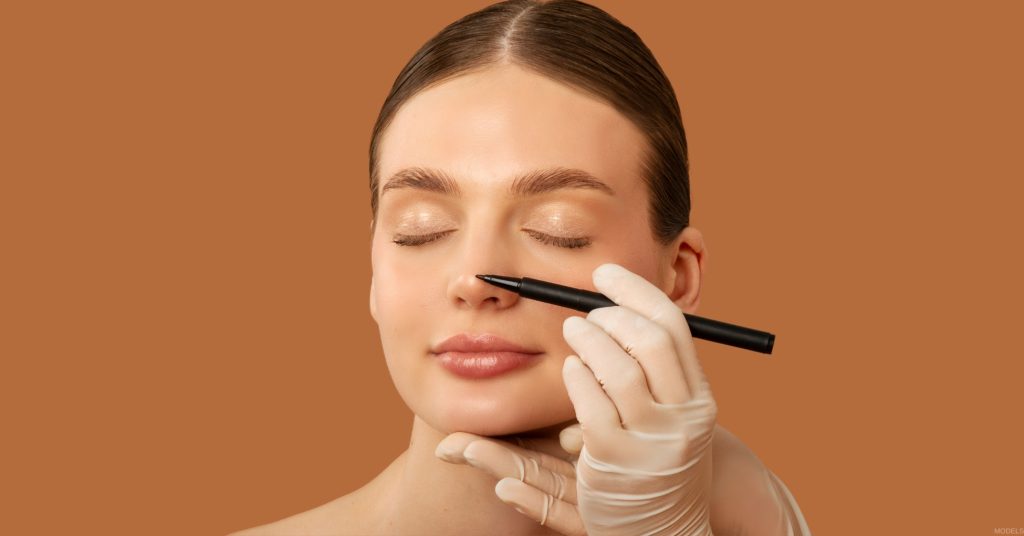
Recovery from rhinoplasty is less like flipping a switch and more like developing film. At first, everything may look hazy and incomplete, but with time and care, the finer details sharpen into focus. Knowing what to expect throughout the different rhinoplasty recovery stages and timeline can shift this waiting period from frustrated impatience to eager (but mindful) anticipation.
Stage 1: Swelling, Bruising, and Initial Healing
In the first few days after rhinoplasty surgery, the most common side effects are swelling, bruising, and nasal congestion. Your facial plastic surgeon will place a tape dressing and protective splint over your nose to support healing, minimize swelling, and prevent accidental injury. These will remain in place for about 12 to 14 days, with a change around the one-week mark.
Rhinoplasty recovery tips for this stage include:
- Keep your head elevated, even while sleeping.
- Use cold compresses around (not directly on) the nose to reduce swelling.
- Take the recommended vitamin supplements to minimize bruising.
You should also avoid our infamous Florida heat and humidity as much as possible during this stage. Air conditioning and shade will keep you comfortable so your body can focus on healing.
Stage 2: Visible Improvements & Activity Restrictions
Most patients notice significant improvement by the second week. Bruising typically resolves at this point, and any lingering discoloration can be covered with makeup once the dressings are removed. Swelling, however, takes longer to fully resolve, and some nasal congestion may linger for up to six weeks.
Rhinoplasty recovery tips for this stage include:
- Avoid strenuous exercise, bending, or lifting.
- Refrain from blowing your nose (you can safely use nasal sprays).
- Skip wearing eyeglasses or sunglasses directly on the bridge of your nose.
Sun exposure can worsen swelling and affect pigmentation during healing. While we encourage you to enjoy our beautiful Tampa lifestyle, we recommend consistent sunscreen and wearing hats or visors when outdoors.
Stage 3: Returning to Normal Routines
At around the six-week mark, most activity restrictions are lifted. Nose job patients can usually resume sports, exercise, and normal daily activities. This is also the stage when you can start wearing glasses again—though our team will show you how to do so without putting pressure on the nose.
Although you’ll feel “back to normal,” it’s important to remember that your results will continue to develop over the course of a year. You’ll notice subtle changes in tissue and cartilage refinement gradually, so patience is critical to your rhinoplasty recovery.
Stage 4: Long-Term Maintenance
Even though you can confidently enjoy your new look within weeks, it’s essential to remain mindful of the healing process. Fibrosis (the natural settling of tissue and cartilage) gives the nose its final shape. For many patients, this stage brings a sense of closure and satisfaction with both their nose’s function and appearance.
Rhinoplasty recovery tips for this stage include:
- Avoid unnecessary trauma from contact sports or heavy glasses.
- Remain patient as your nose settles into its final form.
- Protect against swelling “triggers” such as intense exercise, extreme heat or cold, or sinus flare-ups, which may cause temporary puffiness.
Patients undergoing revision rhinoplasty should take similar precautions to achieve optimal, long-term results.
Start Your Journey
Every rhinoplasty surgery and healing journey is unique at our Tampa facial plastic surgery practice. However, having a clear picture of your expected rhinoplasty recovery timeline helps reduce uncertainty and makes your transformation smoother. If you’re ready to take the next step toward your new look, request a consultation or call us at (813) 877-7917 to begin planning your rhinoplasty.
Leave a Reply